A Texas Grower Finds the Partner—and the Bagger—It Was Looking For
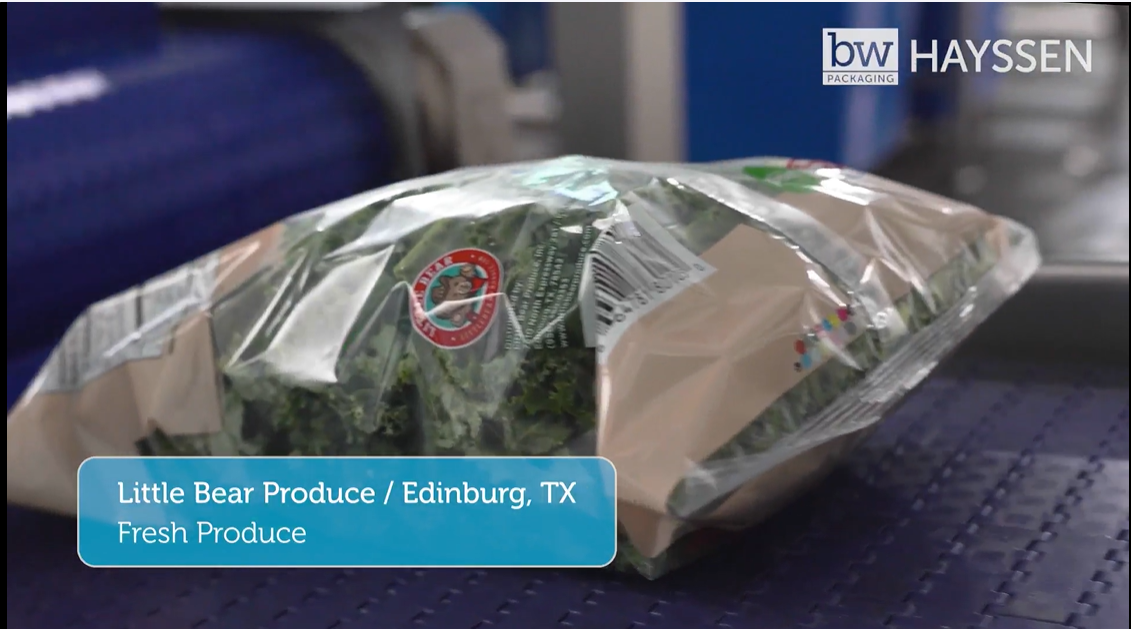
Little Bear Produce, a family-owned grower, packer, and shipper in Edinburg, Texas, launched its value-added fresh-cut line and quickly discovered that its first bagging equipment wasn’t keeping up with demand. After a frustrating experience with another manufacturer’s machine, Little Bear needed a partner who could deliver speed, sanitation, and real support—not just sell equipment. The Hayssen ISB (Intelligent Sanitary Bagger) from BW Packaging proved to be the answer, and the difference was measurable from day one. As a result of this partnership,
Little Bear Produce was able to:
- More than double operational efficiency—from 25–35% OEE on the previous bagger to 65–75% OEE on the Hayssen ISB
- Meet growing demand for bagged fresh-cut greens without adding lines or shifts
- Gain a fully washdown-capable bagger that meets the strict sanitation requirements of a fresh produce operation
- Build a long-term equipment relationship backed by responsive, phone-call-fast technical support
From the Field to the Bag—and the Bagger That Couldn’t Keep Up
Little Bear Produce has been a fixture of the American produce industry since 1986, when Jimmy and Diane Bassetti moved from Vineland, New Jersey, to Texas’s Rio Grande Valley and started farming. Originally known as J&D Produce, the company has grown into one of the region’s most respected grower/packer/shippers, cultivating over 6,000 acres of vegetables each year across farms spanning three countries and four states. The Little Bear brand—recognizable by its teddy bear in a cowboy hat—is now found in retail stores nationwide, known for greens, onions, melons, and more than 40 other fresh produce items.
In early 2022, Little Bear Produce made a strategic decision to launch a value-added fresh-cut line—washed, cut, and bagged greens ready for the consumer. It was a natural extension of the company’s farm-to-table philosophy and a response to growing retailer demand for bagged fresh produce. But building a value-added line meant entering the world of automated packaging, and that’s where things got complicated.
Little Bear went with a bagger that came recommended—and were not happy with the results. The machine couldn’t keep pace with growing volume, and the team found themselves fighting the equipment rather than running it. Data collected on the production floor told the story clearly: the original bagger was operating at somewhere between 25% and 35% overall equipment effectiveness (OEE). For a company that was investing in value-added as a growth engine, those numbers were unacceptable.
Little Bear Produce was still new to automated packaging. What they needed wasn’t just a faster machine—they needed a partner. An expert in the space who could not only sell them equipment, but had the know-how and the willingness to teach.
The People on the Floor Made the Difference
When Little Bear Produce evaluated the Hayssen ISB, the machine’s capabilities checked every box: servo-driven speed, sanitary design built for high-pressure washdown, intuitive operation, and the status lighting system that lets supervisors monitor machine state from across the floor. But what sealed the deal wasn’t on the spec sheet.
It was the people BW Packaging put on the production floor. Little Bear’s team saw firsthand how BW’s technicians and engineers interacted with their operation—not as salespeople running a demo, but as partners invested in making the line work. The Little Bear team liked how the bagger operated, but it was the people on the floor who made them feel like BW was the right partner. They described the BW team as “extremely impressive.”
That impression has only deepened since installation. Little Bear’s point of contact at BW Packaging is Drew, and the relationship reflects how the company prefers to work: directly, personally, and fast. Little Bear’s leadership describes themselves as phone-call people, not email people. When an issue comes up, they pick up the phone. Drew answers. If he doesn’t know the answer, he connects them with someone who does—whether that’s engineering, support, or design.
The result is a problem-resolution cycle that takes 30 seconds instead of three or four hours waiting for an email. For a fresh produce operation where product shelf life is measured in days and every minute of downtime has a direct cost, that kind of responsiveness isn’t a nice-to-have. It’s the difference between making the load and missing it.
As Little Bear’s team put it: whether it’s engineering, support, or design, there’s a cohesive team behind them—and a cohesive team behind the bagger.
The Numbers Told the Story
The impact of the Hayssen ISB was visible immediately—and it was quantifiable. Little Bear Produce ran two production lines that were essentially identical in every way except the bagger and scale. The comparison was as close to a controlled test as a real-world production environment gets.
65–75% OEE vs. 25–35%
The data Little Bear collected was unambiguous. The Hayssen ISB operated at 65% to 75% overall equipment effectiveness at their facility. The previous bagger on the identical line ran between 25% and 35%. That’s not an incremental improvement—it’s a fundamentally different level of performance from the same production environment.
The operators felt the difference before the data confirmed it. When Little Bear had two different baggers running on side-by-side lines, the operators assigned to the older machine would ask to switch to the ISB. They said it was more efficient and easier to set up. Once Little Bear installed a second ISB to replace the underperforming machine, the entire team was happy. It was, in the team’s words, an easy decision—both financially and operationally.
Clean from Top to Bottom
For a fresh-cut produce operation, sanitation isn’t a feature—it’s the foundation. Little Bear’s team emphasized the importance of being able to get inside the machine, reach every nook and cranny, and clean everything from top to bottom without worrying about damaging electrical components with water. There are baggers on the market that can’t get wet. The Hayssen ISB isn’t one of them.
The ISB’s IP66/NEMA 4X-rated design means the entire machine—including the touchscreen HMI—is built for high-pressure washdown. For Little Bear, this means faster, more thorough cleaning cycles and complete confidence in the sanitation of the packaging line.
Eyes on the Line from Anywhere
The ISB’s color-coded status lighting has become part of how Little Bear manages its production floor. Green means the machine is running. Red means something is wrong. The system signals when film is running low, when the machine needs attention, and when everything is operating normally—all visible from across the facility. Operators don’t have to physically stand at the machine the entire time. The lights communicate the machine’s state so supervisors can manage by exception rather than by constant presence.
Built for Generations
The long-term value proposition resonates deeply with a family business that thinks in generational terms. Little Bear’s leadership talks about laying the groundwork for the next two or three generations of the Bassetti family. BW Packaging talks about machines from 40 years ago that are still running in the field—and a parts inventory and trained technician base that supports every machine they’ve ever sold, for the lifetime of the system.
As the BW team put it: they sell it once and support it for the lifetime of the system. For Little Bear, that philosophy mirrors their own. They know what it means to build something that lasts. Their employees feel like family, and they believe the same is true at BW. When a brand has stood the test of time, it’s because of the people behind it.
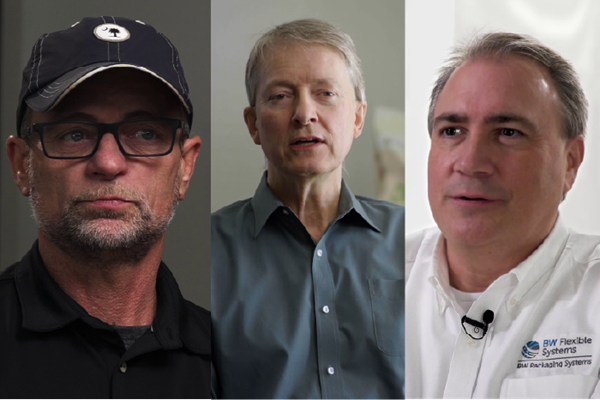
Little Bear’s team was clear about where they go next: their first stop when looking for additional bagger and scale equipment is BW Packaging. They want to align themselves with the best in the industry—because in their words, that will do nothing but lift them up. With two Hayssen ISBs now running on their value-added line and the confidence that comes from a partner who answers the phone, Little Bear Produce is positioned to keep growing. View the adjacent video to hear directly from the Little Bear Produce team about their experience with the Hayssen ISB.