When a Peak-Season Breakdown Threatened Production, BW Packaging Delivered
Can Corporation of America (CCA), a family-owned steel can manufacturer in Blandon, Pennsylvania, experienced a catastrophic seamer failure on one of its Angelus 62H can seaming machines—right in the middle of peak harvest season. With tomato and bean crops coming out of the ground and customers demanding cans immediately, every hour of downtime put customer relationships at risk. CCA called BW Packaging, and the team responded with the kind of urgency that defines what lifetime customer support actually looks like.
As a result of this partnership, CCA was able to:
- Get a critical seaming line back into production after a major mechanical failure—during peak season—without losing a single customer
- Receive hard-to-source replacement components that were personally driven from Ohio to Pennsylvania over a weekend
- Deepen a long-term equipment relationship grounded in service after the sale—the reason CCA keeps coming back to BW Packaging
A Crash in the Middle of Harvest Season
Can Corporation of America is a steel can manufacturer with deep roots in Pennsylvania’s Berks County. Founded as a sister company to Giorgio Foods—the family decided to vertically integrate after years of frustration with third-party can suppliers who delivered poor service and substandard quality—CCA has grown into a nationally recognized manufacturer serving food producers, coffee roasters, and non-food industrial customers from two facilities in Blandon and Reading, Pennsylvania. The operation employs approximately 350 people and runs 16 machines, more than 20 presses, four coating lines, and two cutting lines.
With that much equipment on the floor, CCA operates a mix of legacy and new machinery. Keeping it all running is the daily mission—and no piece of equipment is more critical to that mission than the seaming lines. A can seamer creates the airtight, hermetic double seam between the can body and the can end. If a seamer goes down, production stops. Cans don’t get sealed. Customers don’t get filled.
That’s exactly what happened during peak harvest season—August or September—when tomatoes and beans are coming out of the ground across the region and canners need product immediately. One of CCA’s Angelus 62H seamers suffered a catastrophic mechanical failure: the roll dropped. On a high-speed rotary seamer turning at full production speed, a dropped roll brings the machine to a violent, sudden halt. Once that happens, the seamer is dead in the water. No cans get sealed until the machine is rebuilt.
The timing could not have been worse. CCA’s customers needed cans on the shelf. The crops weren’t going to wait. And the components required to get the seamer back online—turret assemblies and related parts—are not the kind of items you order today and receive tomorrow. These are precision-machined components with long lead times under normal circumstances.
Parts in a Van on a Weekend
CCA called Terry at BW Packaging and laid out the situation: a major breakdown, peak season, and a legacy machine that needed components most suppliers would need weeks or months to deliver. The Angelus 62H is part of the Legacy Series—a line of seamers that has been an integral part of can manufacturing for decades and remains trusted in today’s demanding production environments. But “legacy” doesn’t mean “abandoned” at BW Packaging. It means supported.
The BW Packaging team went to work making connections internally. They identified usable components from a machine in storage and sourced additional parts from another unit. Within two weeks of receiving CCA’s turret, the team had assembled what was needed to rebuild the seamer. But the real measure of the response wasn’t the engineering—it was the logistics.
BW Packaging personnel loaded the components into a van in Ohio and drove them to Reading, Pennsylvania—on a weekend. Not shipped. Not expedited freight with a Monday delivery. Personally driven, door to door, because the team understood that for CCA, this wasn’t just an order number. It was a production line that fed customers who were waiting on cans while crops were coming out of the ground.
As one BW Packaging team member involved in the response described it: the urgency wasn’t just about filling the order for the company. It was about helping CCA with the real-world problem they were facing. That distinction—between processing a service ticket and understanding what’s actually at stake on a customer’s production floor—is what separates a vendor from a partner.
BW Packaging’s field service technicians followed the parts to CCA’s facility and got the Angelus 62H reassembled and back into production. CCA was seaming cans again in a timeframe that, by any measure of a catastrophic mechanical failure during peak season, was remarkable.
Why They Keep Coming Back
The bottom line for CCA was the one that mattered most: they didn’t lose a single customer. Despite a catastrophic equipment failure at the worst possible time of year, BW delivered the parts, and the service team rebuilt the machine so that CCA was able to produce cans and deliver them to its customers on time. The crisis became a proof point for the partnership rather than a scar on it.
CCA’s leadership is clear-eyed about the reality of manufacturing. With 25-plus years of experience, they know that equipment catastrophes happen regardless of how disciplined your preventive maintenance program is. What matters is what happens next—and specifically, whether the company standing behind the equipment will do what it takes to get the line back up.
For CCA, BW Packaging has answered that question repeatedly. The Angelus seamer crisis was the most dramatic example, but it’s not the only one. What brings CCA back is a pattern of behavior that adds up to something larger than any single service call: the ability to come back after commissioning, make changes, make the installation successful, and stand behind the product long after the purchase order is closed.
Service After the Sale
That phrase—service after the sale—comes up repeatedly when CCA describes why they continue to invest in BW Packaging equipment. It’s the factor that carries the most weight in their purchasing decisions, and it’s the one that most competitors struggle to match.
In the can manufacturing industry, a seamer is the heartbeat of the production line. The hermetic double seam it creates is what preserves the product inside, protects the brand on the label, and ensures the can reaches the consumer exactly as intended. When that capability goes down—whether on a brand-new machine or a legacy workhorse like the 62H—the manufacturer needs an equipment partner who will treat the problem with the same urgency they feel on the floor.
BW Packaging and the Angelus seamer brand have been demonstrating that commitment for over a century. Angelus pioneered the precise, repeatable double seam that became the industry standard, and the Legacy Series seamers—including the 62H that CCA relies on—continue to operate in demanding applications across the globe. The newer V-Series carries that same dedication forward with advancements in hygiene, manufacturing flexibility, and lightweight can handling. But the through-line across every generation of Angelus equipment is the same: responsive customer service, OEM spare parts, expert technical service, and support that lasts as long as the customer owns the machine.
As CCA’s team put it simply: they feel confident that anything they buy from BW will be successful. And when something goes wrong—because in manufacturing, something always eventually does—they know the people on the other end of the phone will do whatever it takes to make it right. That’s why they go back to BW every time.
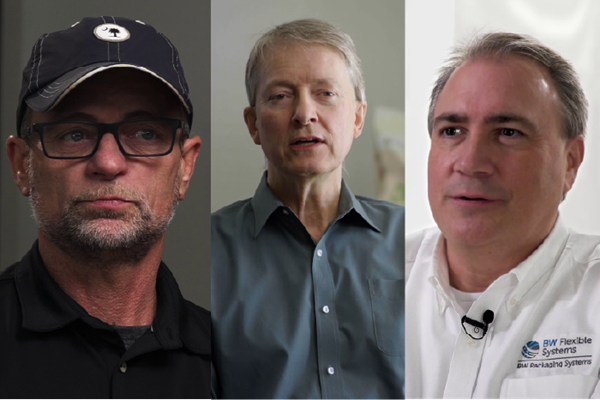
View the adjacent video to hear directly from the Can Corporation of America team about their experience with Angelus equipment and BW Packaging’s lifetime customer support.